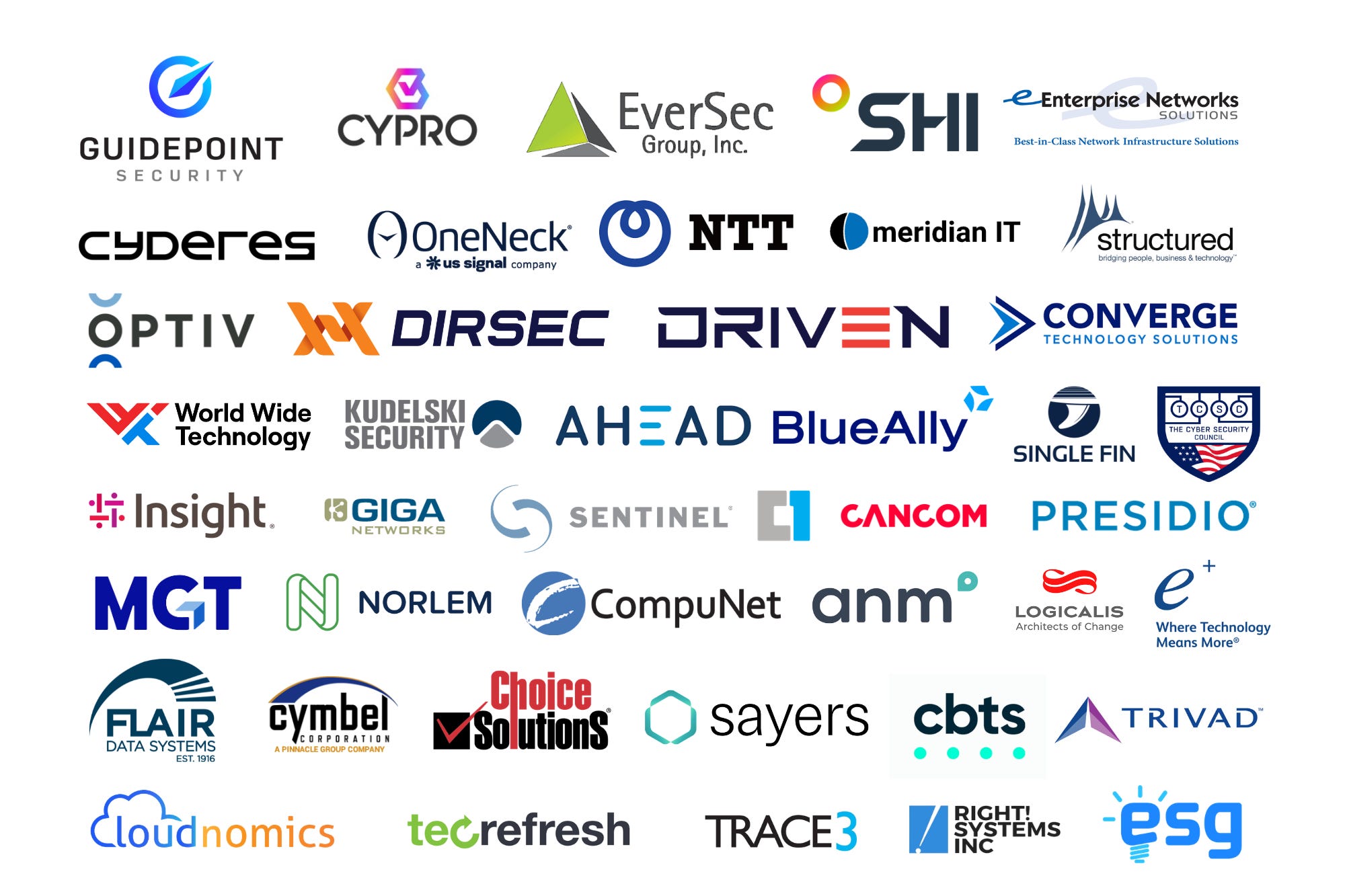
Over the past several months, as we are all still processing how AI is reshaping the world as we know it, one topic that doesn’t get as much attention is distribution. Or rather, people do talk about it, but if you listen closely, it feels like everyone is betting that the way companies buy today is going to get fully dismantled. If you listen to some pretty smart folks, it sounds like enterprises are just going to buy everything they need from Anthropic or OpenAI, and be done.
I happen to strongly disagree with that, especially when it comes to the role of channel. If you ask me, not only is channel here to stay, but in the years to come, it will matter more than ever before.
This issue is brought to you by... Opal.
agent.ID – Top Security Leaders on Governing AI Agents
November 5, 2026 | 10:00 AM – 12:00 PM PT | Virtual Event
As AI agents gain access to sensitive systems and data, how can security teams maintain visibility, control, and accountability?
Join Sounil Yu, Chief AI Officer at Knostic, and CISOs from Notion, Instacart, and Elastic for an exclusive virtual event exploring the future of AI agent security and identity governance.
Hear firsthand how security leaders are approaching agent identities, implementing least privilege, and adapting IAM strategies for an AI-driven world.
Walk away with practical insights and actionable strategies to help your organization securely adopt AI agents.
On the surface, sales should be easier than ever
If you listen to some Bay Area startups, sales are now easier than ever. And why wouldn’t it be? There are what feels like hundreds of the agentic SDR startups, agentic account management tools, and the kind of automation that some 3-4 years ago we could only dream of. Every email you get is hyper-personalized, every LinkedIn message references some post you forgot you wrote, and every cold call makes it clear that the person on the other side knows more about you than your best friend. Once in a while we all get the “Hey, [Name] “ message, but we are so used to it now that we don’t even bother.
Bottom line, there is an agentic tool for everything, as long as you’re willing to pay for tokens and give it access to as much data as possible. Bay Area says that “Sales is solved”.
The only problem is that it’s not. When everyone is using the same tools, and everyone is sending the same personalized messages, our inboxes are permanently turning into a pile of garbage. You don’t have to be a CISO to know that; I am not, but even I get inundated with all the spam coming my way.
This is the classic tragedy of the commons: every startup thinks, “I know everyone else is spamming CISOs, but my message isn’t spam; I am seriously trying to help them with relevant information,” and so… one more outreach email lands in the CISO’s inbox.
In practice, this is the most bizarre time in history to sell (and buy) enterprise software
AI was supposed to make sales easier, but instead it made it a lot harder. The email spam is just one part of it. A much bigger problem is the noise AI creates. AI makes it really fast and easy to build products and reach buyers. The cost of sending personalized emails is going down, the cost of cold calling is going down, but the competition for actually getting someone’s attention is exploding.
All this means more pitches, more vendors, and more noise. That noise is incredible. Everything is agentic: from the companies started in the past 2 years (okay, fair) to the products that have been around for 30 years (really?). Look at cybersecurity, where everyone is securing agents; those that aren’t securing agents are using agents to secure everything else.
How can a CISO make sense of all this noise? If you think that having an agentic SDR bombard them with emails is the way to go, think twice. Customers are tuning out of all that - I had a bunch of CISOs recently tell me that they’re going to stop showing up at big conferences because all they see is noise, and it’s worse than ever before.
The only shortcut that influences buying decisions is trust
This is the irony here: the easier AI makes it to reach customers, the more noise it creates, and the harder it makes it for companies to reach people. The only shortcut that actually influences buying decisions has nothing to do with AI agents. It’s trust. I was talking about it back in 2023 (when LLMs were barely useful), and it is only more true today.
Trust is inherently human. It’s about relationships; it’s about knowing that someone was there for you when you needed help, and it’s about trusting that they will be there for you now.
This is why the channel is so powerful and why, in an AI-first world, their influence will only grow. All the partners, all the service providers, all the implementation consultants - they are the ones customers trust, and the ones customers go to for advice. When buyers are bombarded by thousands of pitches, they are the ones they are spending the time with. Don’t believe me? Well, look at the fact that Anthropic made Accenture its first embedded evaluator - I am pretty sure it has a lot to do with trying to piggyback on the trusted relationships Accenture has with enterprise and position itself as “safe and ready” for enterprise adoption. Pretty smart if you ask me.
The channel ecosystem is going to grow, but to succeed, partners need to change
Channel is not going anywhere anytime soon. On the contrary, it’s pretty clear that channel is going to be instrumental to AI adoption in enterprise, and especially in cyber. People buy from people they know will be there when something goes sideways (and in security, it often does).
For channel partners, the opportunity is huge. Of course, that trust has to be earned and protected. Partners who simply push whichever vendor pays the highest margin will eventually lose the very thing that makes them valuable.
It’s pretty clear to me that the expectation for what success looks like for channel partners is changing. A decade ago, nobody questioned what the “V” in a VAR (value-added reseller) stood for, but today, buyers very much want to know that.
The expectations are changing quickly.
First, buyers want to know that channel partners have their back, and that they are bringing them solutions that are likely to fit their environment and solve their specific problems, vs. generic “top 3” options.
Second, buyers want to see that their channel partners don’t just put forward the same decades-old tools. Customers want to be educated about new solutions and new ideas, which means that channel partners have no choice but to embrace startups. Virtually everything new today is built by startups (especially in cyber!), so any channel partners that aren’t embracing startups are already behind.
Third, buyers want to be treated as partners. They don’t want to be given limited options of tools that make VARs the best margins; they want a menu of most suitable partners that are likely to be the best fit for their needs. Customers want partners who stay vendor-neutral and focus on their interest first.
To put it differently, vendors that win will be the ones partners are comfortable putting their own name behind. Partners that win will be the ones ready and willing to work with emerging technologies.
I will be putting together a list of partners who are working with cyber startups, so hit respond and drop the names of those who are particularly startup-forward for me to include on that list.